


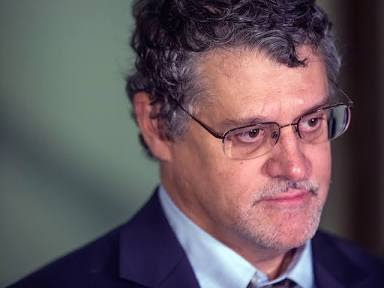
FIONA HILL
[Who Is Fiona Hill? How Was She Able To Assemble The Steele Dossier 'Team' and Still Become A Trump Whitehouse Advisor, and Then Go On To Testify Against Trump In The First Impeachment?]
I posted this opinion and research piece below in October of 2024. We have always known Russia has tried to influence our elections since the beginning of the Cold War. It's nothing new. Obama spent US tax dollars in Israel in an attempt to get Benjamin Netanyahu defeated. It failed. Fast forward to today, from documents declassified by Tulsi Gabbard, we now know Obama and his Intelligence Staff knew Russia didn't affect the 2016 election, and they knew the Trump campaign did not collude with Russia. However, the Obama Administration was aware of the fake Steele Dossier paid for and pushed by the Clinton campaign. That was used to push the narrative of Trump/Russia Collusion that disrupted the first three years of Donald Trump's first term. What is not talked about much if at all, is how the Steele Dossier was created. Fiona Hill, who became a Whitehouse Advisor in the Trump Whitehouse and then testified in the first impeachment, was the person responsible for putting the team together responsible for the production and financing of the Steele Dossier.
Did Russia affect the 2016 election? (NOW WE KNOW THEY DID NOT)
The question of whether Russia affected the outcome of the 2016 U.S. presidential election is complex and has been the subject of significant investigation. Here’s a breakdown of what is known:
1. Russian Interference:
U.S. intelligence agencies, including the FBI, CIA, and NSA, concluded that Russia engaged in efforts to interfere in the 2016 election. This interference took two primary forms:
- Disinformation Campaigns: Russian operatives, particularly through the Internet Research Agency (IRA), conducted a large-scale social media campaign aimed at sowing discord, amplifying divisive issues, and influencing voters. They used fake accounts and trolls to spread misinformation, promote conspiracy theories, and sometimes support specific candidates. These efforts targeted both political parties but often focused on undermining Hillary Clinton's campaign and boosting Donald Trump’s.

- Hacking and Leaks: Russian hackers, affiliated with Russian military intelligence (GRU), hacked the Democratic National Committee (DNC) and the email account of Clinton's campaign chairman, John Podesta. The stolen emails were then released by platforms like WikiLeaks, which generated negative media coverage of the Clinton campaign.
2. Impact on the Election Outcome:
While there is consensus that Russia interfered in the 2016 election, the extent to which this interference affected the actual outcome remains debated. Key points include:
- No Evidence of Hacked Voting Machines: There is no evidence that Russian actors tampered with voting machines or directly altered vote tallies. U.S. election infrastructure remained secure in that sense.

- Influence on Voters: While Russian disinformation and the leaks of Democratic emails likely influenced the media environment and voter perceptions, it is difficult to measure how much this changed voting behavior or the final results. Many factors contributed to the outcome, including domestic political dynamics, campaign strategies, and the candidates themselves.
- Close Results: The 2016 election was decided by narrow margins in key battleground states (such as Michigan, Wisconsin, and Pennsylvania), where Trump won by less than 1% of the vote in some cases. Given the closeness of the race, some analysts suggest that Russian interference may have been one of several factors that influenced the result, though it’s impossible to determine with certainty how much of an impact it had.
3. Investigations and Reports:
The U.S. government conducted several investigations into Russian interference:
- The Mueller Report (2019): Special Counsel Robert Mueller’s investigation confirmed that Russia interfered in the election through cyberattacks and disinformation campaigns. However, the report did not establish a criminal conspiracy between the Trump campaign and Russian actors. It also did not make a definitive conclusion about whether the interference swayed the outcome of the election, leaving the question open.
- Senate Intelligence Committee Report (2020): The bipartisan Senate report similarly concluded that Russia sought to interfere in the 2016 election, largely in favor of Trump, but did not conclude whether this changed the election’s outcome.

Summary:
Russia did interfere in the 2016 election through disinformation campaigns and hacking efforts aimed at damaging Hillary Clinton’s campaign and benefiting Donald Trump. However, there is no definitive proof that this interference altered the outcome of the election, though it remains a topic of ongoing debate. The consensus is that Russia’s actions are aimed at destabilizing U.S. democracy and undermining public confidence in the electoral process.
What role did Fiona Hill play in the Steel Dossier, according to the Durham report?
According to the Durham Report (2023), Fiona Hill, a former National Security Council official and Russia expert, did not play a direct role in the creation or dissemination of the Steele Dossier. However, her name appears in the context of information related to the dossier, particularly through her connections with individuals involved in its development.
Here’s an outline of Hill's role as mentioned in the Durham investigation:
1. Introduction of Christopher Steele to Danchenko:
Fiona Hill is mentioned as the person who introduced Christopher Steele, a former British intelligence officer who compiled the Steele Dossier, to Igor Danchenko, the primary source for much of the information in the dossier. Hill worked with Danchenko in her previous roles as a Russia expert and had professional interactions with Steele.
Hill confirmed to investigators that she introduced Steele and Danchenko years earlier because both had overlapping interests in Russian politics and intelligence. Hill’s introduction was intended to facilitate professional collaboration, not to involve Danchenko in the development of the dossier. At the time, Hill was not aware that Danchenko would later become a key source for the dossier.

2. Durham Report’s Conclusions on Hill's Role:
The Durham report does not accuse Hill of any wrongdoing or suggest that she was involved in any efforts to produce false information. Her introduction of Steele to Danchenko is noted as part of the broader investigation into how the dossier was compiled. Hill, according to Durham's findings, was not involved in the gathering or verification of the allegations contained in the dossier.
3. Fiona Hill’s Public Statements:
Hill has publicly criticized the Steele Dossier, expressing concerns about the credibility of some of its sources and the unverified nature of certain claims within it. During her testimony in various investigations, she distanced herself from the dossier and expressed skepticism about some of its content.

Summary:
Fiona Hill's involvement, as outlined in the Durham Report, primarily consists of introducing Steele to Danchenko, who later became a key source for the dossier. She was not involved in the creation, promotion, or verification of the Steele Dossier, and there is no suggestion that she played a direct role in its compilation or dissemination.
How did Fiona Hill get a position in the Trump Whitehouse after collaboration in the Steele Dossier?
Fiona Hill was appointed to the Trump White House as a senior director for European and Russian affairs at the National Security Council (NSC) in 2017, despite the fact that she had introduced Christopher Steele to Igor Danchenko, a source for the Steele Dossier. There are several key reasons why her involvement with the Steele Dossier did not prevent her from serving in the Trump administration:

1. Her Expertise on Russia:
Fiona Hill is a highly regarded expert on Russia and Vladimir Putin, with extensive experience in government and academia. Before joining the Trump administration, she served in the George W. Bush and Obama administrations as a national intelligence officer for Russia and Eurasia at the National Intelligence Council. She is also the co-author of a well-regarded book on Putin titled Mr. Putin: Operative in the Kremlin. Her expertise in Russian affairs made her a valuable asset to any administration, regardless of her previous connections.
2. Limited Role in the Steele Dossier:
Although Hill introduced Steele to Danchenko, her role in the dossier was minimal, and there is no evidence that she contributed to or endorsed its content. By the time she joined the Trump administration in 2017, her connection to the dossier was not widely known, and she had not been involved in its creation or its dissemination. This lack of direct involvement may have allowed her to be seen as neutral regarding the dossier.
3. Trump Administration’s Hiring Process:
When Hill was brought into the Trump administration, she was recommended by Lieutenant General H.R. McMaster, who was Trump’s National Security Advisor at the time. McMaster prioritized competence and expertise, and Hill’s background as a leading Russia expert fit the qualifications needed for the role. Her appointment reflected McMaster’s approach of bringing experienced professionals into key national security positions, even if they did not necessarily align politically with Trump.

4. Her Public Criticism of the Steele Dossier:
Fiona Hill publicly expressed skepticism about the Steele Dossier, criticizing some of its claims as unverified. This skepticism may have helped distance her from any negative associations with the dossier. In her public testimony during the Trump impeachment hearings in 2019, Hill made clear that she had concerns about the credibility of parts of the dossier, which likely bolstered her standing as a nonpartisan expert.
5. Timing and Awareness:
At the time of Hill's hiring in 2017, the full details of the Steele Dossier, including the identities of its sources and contributors, were not yet fully public. Hill’s minor role as the person who introduced Steele to Danchenko likely wasn’t a major focus during her vetting process, as she wasn’t directly implicated in any alleged wrongdoing or political maneuvering related to the dossier.

Summary:
Fiona Hill’s appointment to the Trump White House was primarily due to her deep expertise in Russian affairs and her reputation as a skilled analyst, not her peripheral involvement with the Steele Dossier. Her limited role in the dossier’s development, combined with her public criticism of it and the Trump administration’s focus on her qualifications, allowed her to serve in a senior position at the National Security Council.
What was Fiona Hill's relationship with Danchenko?
Fiona Hill's relationship with Igor Danchenko, the primary source for much of the Steele Dossier, was professional in nature, based on their shared academic and research interests in Russian affairs. Here’s an outline of their relationship:
1. Professional Connection:
Fiona Hill and Igor Danchenko worked together at the Brookings Institution, a well-known think tank, in the mid-2000s. Hill was a senior fellow at Brookings, focusing on Russian and Eurasian issues, while Danchenko was a researcher. They collaborated on projects related to Russia and global political dynamics.
2. Introduction to Christopher Steele:
Hill is known to have introduced Igor Danchenko to Christopher Steele, a former British intelligence officer, sometime before the 2016 election. Hill and Steele were acquainted professionally because both worked on issues related to Russia. Hill facilitated the introduction because she believed Danchenko, with his knowledge of Russian politics and intelligence, could be a useful source for Steele’s work. At the time, this introduction was not related to the Steele Dossier, which was not yet in development.
3. No Direct Role in the Steele Dossier:
While Hill introduced Danchenko to Steele, she did not play any further role in the development of the dossier or in the collection of the information that went into it. Hill later expressed skepticism about the reliability of parts of the dossier, distancing herself from its findings. She has stated that she was unaware of Danchenko’s involvement as a key source in the dossier until after it became public.

4. Public Statements:
Hill has spoken about her relationship with Danchenko in public testimony and interviews, emphasizing that their relationship was purely professional and research-based. She described him as a competent researcher, and while she made the initial introduction to Steele, she had no involvement in what followed.

Summary:
Fiona Hill’s relationship with Igor Danchenko was professional, stemming from their shared work at the Brookings Institution on Russian affairs. While she introduced Danchenko to Christopher Steele, she had no further involvement in the development of the Steele Dossier and has distanced herself from its claims.

How did Fiona Hill know of Christopher Steele?
Fiona Hill knew Christopher Steele through their shared professional background in Russian and Eurasian affairs, as both were involved in intelligence and analysis related to Russia.

1. Background in Russian Affairs:
Fiona Hill is an expert on Russia and Eurasia, having worked as a senior fellow at the Brookings Institution and previously as a national intelligence officer for Russia and Eurasia at the National Intelligence Council. Steele, a former British intelligence officer, also specialized in Russian intelligence and geopolitics during his time with MI6, where he was stationed in Moscow and focused on Russian matters.

2. Shared Professional Networks:
Given their similar professional focus, Hill and Steele moved in overlapping circles of experts on Russia. Both were part of the broader community of analysts, diplomats, and intelligence officers who dealt with Russian politics, intelligence, and security issues, particularly after the collapse of the Soviet Union. These networks often involved think tanks, government agencies, and private intelligence firms, where professionals shared insights and collaborated on issues related to Russia.

3. Introduction to Steele’s Work:
Hill likely became acquainted with Steele during her time in the think tank world or through her government work, given their common focus on Russian affairs. Steele had founded Orbis Business Intelligence, a private intelligence firm, after leaving MI6, and his firm became known for conducting investigations related to Russia, which would have been of interest to Hill given her expertise.

In sum, Hill knew Steele because both were established experts in Russian affairs, and they were connected through their shared professional networks. This familiarity led Hill to introduce Steele to Igor Danchenko, a source with relevant insights into Russian politics.
How did the Clinton campaign meet Christopher Steele and Danchenko?
The Clinton campaign’s connection to Christopher Steele and Igor Danchenko emerged through a series of interactions that involved the use of private intelligence services to investigate potential links between Donald Trump and Russia during the 2016 presidential election. Here’s how this relationship developed:

1. The Fusion GPS Engagement:
The connection began when the Clinton campaign, through the Democratic National Committee (DNC), hired the political consulting firm Fusion GPS in April 2016. Fusion GPS was initially retained to conduct opposition research on Donald Trump.
2. Christopher Steele’s Involvement:
- Engagement by Fusion GPS: After the campaign engaged Fusion GPS, the firm turned to Christopher Steele, who was a former British intelligence officer and had established a reputation for his expertise in Russian affairs. Steele was approached because of his extensive background in intelligence and his previous work in Russia.
- Steele’s Contract: Fusion GPS hired Steele to investigate Trump's connections to Russia and to gather information about potential misconduct. Steele's investigations led to the creation of the Steele Dossier, which contained various allegations regarding Trump’s ties to Russia and other compromising information.

3. Igor Danchenko’s Role:
- Source for Steele: Steele needed reliable sources for his investigation, and he turned to Igor Danchenko, whom he had previously worked with in the past. Danchenko was a Russian-born researcher and analyst with a strong background in Russian affairs, and he had previously worked with Steele on other matters.

Danchenko’s Information: Danchenko provided Steele with information that formed the basis for many of the claims in the dossier. He acted as one of Steele’s primary sources, relaying information he gathered through his contacts in Russia and the Russian expatriate community.
4. Indirect Connection to the Clinton Campaign:
While the Clinton campaign did not meet Steele and Danchenko directly, they were indirectly involved through Fusion GPS:

- Steele and Danchenko’s Work: The work that Steele and Danchenko performed was ultimately commissioned by Fusion GPS, which was working on behalf of the Clinton campaign and the DNC. Thus, their research and findings were intended to provide the campaign with information that could be used against Trump.
Summary:
The Clinton campaign connected with Christopher Steele through Fusion GPS, which was hired for opposition research on Trump. Steele, in turn, worked with Igor Danchenko as a source for information that became part of the Steele Dossier. The campaign did not directly meet Steele or Danchenko but was the ultimate beneficiary of the intelligence gathered through their efforts.
Did Trump collude with the Russians in 2016?
The question of whether Donald Trump colluded with Russia during the 2016 presidential election has been the subject of extensive investigation and debate. Here’s a summary of the findings and conclusions related to this issue:

1. Mueller Investigation:
- Special Counsel Robert Mueller was appointed in May 2017 to investigate Russian interference in the 2016 election and any potential collusion between the Trump campaign and Russian officials. The investigation lasted nearly two years and included interviews with numerous witnesses, the collection of documents, and the examination of various communications.
- Collusion Findings: In March 2019, Mueller released his report, which concluded that while Russia did interfere in the election through disinformation campaigns and hacking efforts, the investigation did not establish that the Trump campaign conspired or coordinated with the Russian government in its election interference activities.

2. Key Points from the Mueller Report:
- No Conspiracy: The report found no evidence of a criminal conspiracy between the Trump campaign and Russia. While there were numerous contacts between Trump campaign officials and individuals with ties to Russia, these contacts did not rise to the level of criminal conspiracy or coordination.
- Obstruction of Justice: While the investigation did not establish that the Trump campaign colluded with Russia, it did explore instances of potential obstruction of justice by Trump regarding the investigation. Mueller did not exonerate Trump on obstruction charges, but the report did not recommend criminal charges either, largely citing Department of Justice guidelines against indicting a sitting president.

3. Senate Intelligence Committee Report:
- In 2020, the Senate Intelligence Committee issued a bipartisan report confirming that Russia had interfered in the election and had actively sought to promote Trump’s candidacy while discrediting Hillary Clinton. However, the report did not find evidence of collusion or conspiracy between the Trump campaign and the Russian government.

4. Public and Political Debate:
- Despite the findings of the Mueller investigation and the Senate report, the question of collusion remains politically charged. Some critics of Trump continue to assert that there were unethical connections and that his campaign welcomed Russian assistance, particularly through the dissemination of hacked emails and disinformation.
- Supporters of Trump often argue that the investigations were politically motivated and that the absence of criminal charges indicates that no collusion occurred.
Summary:
The investigations, including the Mueller Report and the Senate Intelligence Committee findings, concluded that there was no evidence of collusion or conspiracy between Donald Trump and Russia during the 2016 election. While there were numerous contacts between the Trump campaign and individuals with Russian ties, these did not meet the legal threshold for conspiracy or coordination with the Russian government's efforts to interfere in the election.
Will the 2024 Election be legitimate?
The legitimacy of the 2024 U.S. presidential election will depend on several factors, including the electoral process, the integrity of the voting system, and how various stakeholders respond to the election results. Here are some key points to consider regarding the potential legitimacy of the 2024 election:

1. Election Administration:
- State Oversight: Elections in the U.S. are administered at the state and local levels, with each state establishing its own rules and procedures. Most states have established laws and regulations to ensure the integrity of elections, including voter registration processes, identification requirements, and ballot security measures.
- Election Security: Concerns about election security, including the potential for cyberattacks, misinformation campaigns, and voting machine integrity, continue to be discussed. Many states have implemented measures to secure their election infrastructure, especially after lessons learned from the 2016 election and subsequent events.

2. Voting Methods:
- Mail-in and Early Voting: The increase in mail-in voting and early voting options has expanded access to the electoral process for many voters. However, these methods have also been a point of contention, with some arguing that they can lead to fraud or manipulation, despite studies indicating that voter fraud is extremely rare in the U.S.
- Voter ID Laws: Different states have varying requirements for voter identification, which can impact perceptions of legitimacy. Proponents argue that ID laws protect against fraud, while opponents argue they can disenfranchise voters.
3. Legal Challenges and Political Climate:
- Potential for Legal Challenges: The 2024 election could see significant legal challenges, particularly if the results are close or contested. The political climate leading up to the election, including rhetoric from candidates and parties, may also influence how voters perceive the legitimacy of the election process.
- Trust in Institutions: Public trust in electoral institutions is crucial for the perception of legitimacy. Factors such as partisan rhetoric, misinformation, and previous election controversies can erode trust and lead to claims of illegitimacy, regardless of the actual conduct of the election.
.png)
4. Post-Election Responses:
- Acceptance of Results: The legitimacy of the election will also hinge on how candidates, parties, and their supporters respond to the results. If major candidates refuse to accept the outcome or make baseless claims of fraud without evidence, it could lead to a significant challenge to the perceived legitimacy of the election.
- Role of Media and Misinformation: The spread of misinformation regarding the election process, voting procedures, and results can also impact public perception. Responsible reporting and efforts to combat misinformation will be vital in maintaining trust in the election process.

Conclusion:
While it is impossible to predict with certainty how the 2024 election will unfold, there are mechanisms in place designed to ensure its legitimacy. The outcome will depend on the integrity of the electoral process, how stakeholders engage with the election results, and the overall political environment leading up to and following the election. Continued public trust in democratic institutions and a commitment to transparent and fair elections will be essential for the legitimacy of the 2024 election.
#voting #fionahill #election #elections #Trump #Harris #Democrats #Russia #collusion #Steeledossier #ChristopherSteele #voterid